Tier 3 certified in South Carolina and certified in Georgia, which means we can legally install the engineered systems most contractors can’t touch. We handle the permit, the soil evaluation and the inspection. Family run out of North Augusta since 2009.
Pumping, a backup, a repair or a new system. Call or text and tell us what is going on.
Call (803) 278-6748Text UsTell us what it is doing and we will get a truck scheduled. Most pumping and repair calls go out the same week, sooner if it is an emergency.
We handle the whole thing, from soil evaluation and permitting through final inspection. Including engineered systems on lots a conventional field will not fit.
South Carolina licenses septic installers in three tiers, and the differences aren’t marketing. They’re written into Regulation 61-56, and they decide what a contractor is legally allowed to touch.
Standard residential installs. Cannot legally repair an existing system at all.
Adds pump systems, grease traps, mounded and commercial systems. Cannot touch a Standard 610 engineered design.
All of the above plus Standard 610 engineered designs. Requires three years of clean installation history plus proof of insurance and bond at every renewal. Tier 3 installers may also self-inspect their own work.
If your lot has clay, a high water table, or not enough room for a conventional drainfield, we're one of the few contractors in the CSRA legally able to install what it actually needs. And we're certified on the Georgia side too.
See our credentialsPutting in a pool, building an addition, or just cannot find the tank? Our radar finds septic tanks, drainfield lines and buried pipes without digging a hole, and a licensed septic installer reads the scan. 811 stops at the meter. We find the rest.
Illustration. On a real scan, buried objects show up as curved reflections like these.
Residential and commercial, both sides of the river. Every service has its own page with straight answers and the real questions answered.
New builds, replacements and difficult lots. Permit to final inspection, both states.
Standard 610, mound and bed systems for lots that failed a conventional design.
Full pump-out, baffle and filter check, written service record.
Backups, odors, soggy yards and failed components.
Honest diagnosis of whether it can be saved or has to be replaced.
Real estate inspections built around the SC and GA disclosure forms.
Clears grease, roots and debris without excavation.
Scheduled service with the paperwork your health inspector wants.
Bigger tanks, bigger tickets, scheduled maintenance contracts.
Drain and line work alongside the septic side.
Find the tank, the field and buried lines before a pool or addition goes in.
Very few operators are properly licensed in South Carolina and certified in Georgia. We are, which means one contractor, one number, whichever side of the Savannah your property sits on.
Aiken, Edgefield and Barnwell counties. SCDES permitting handled.
Towns in gray are Phase 2 and Phase 3 city pages, not yet built.
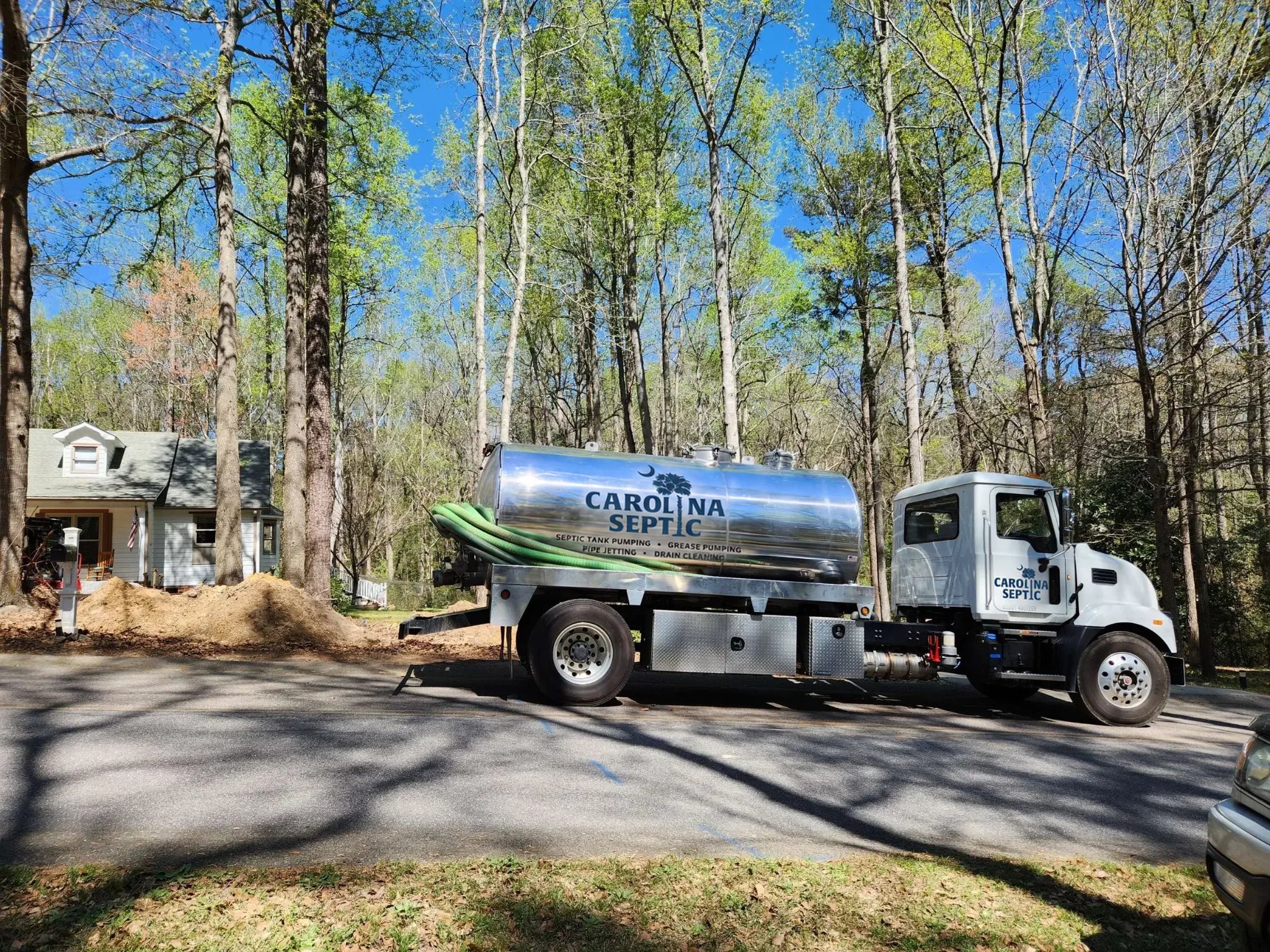
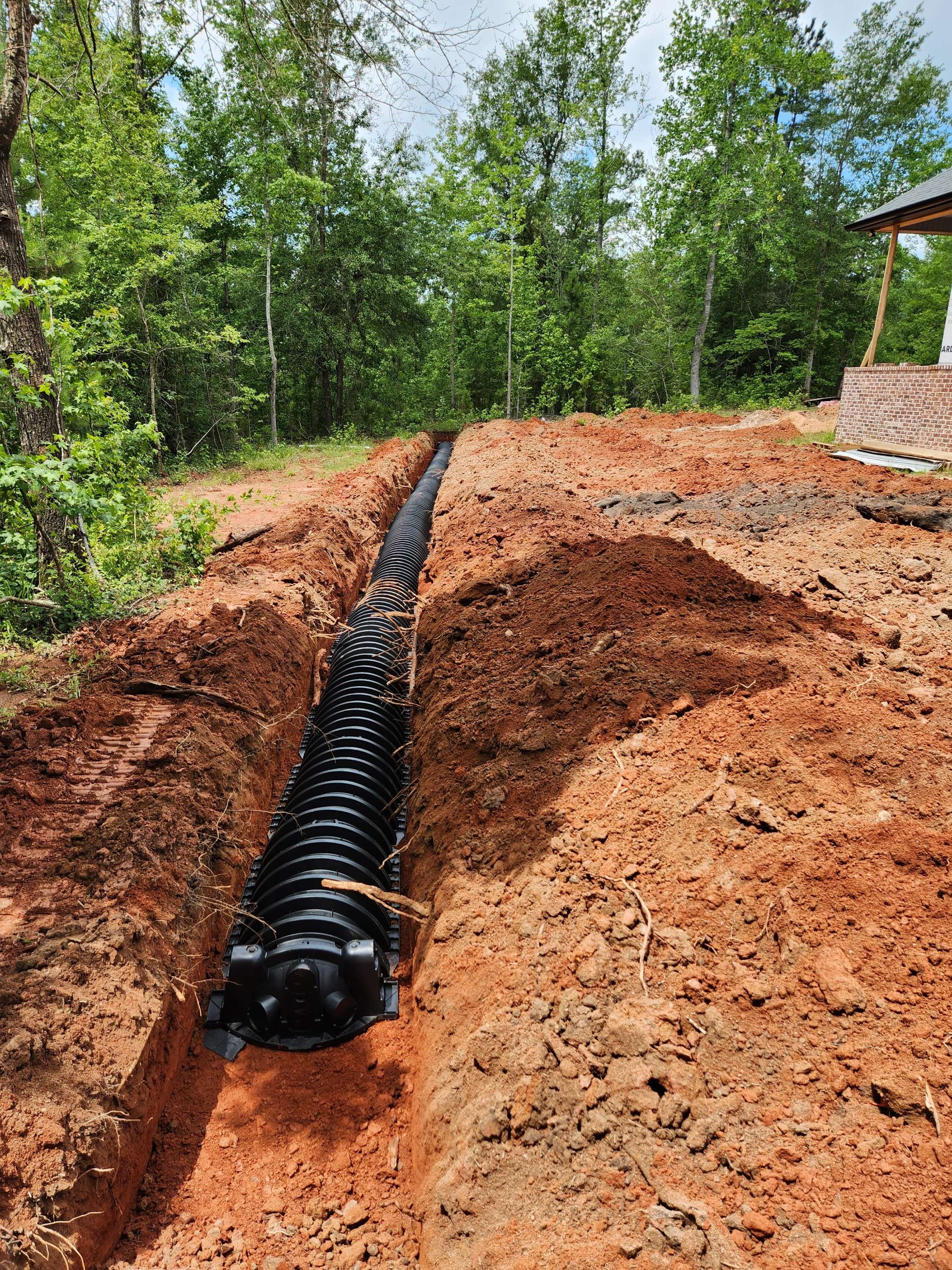
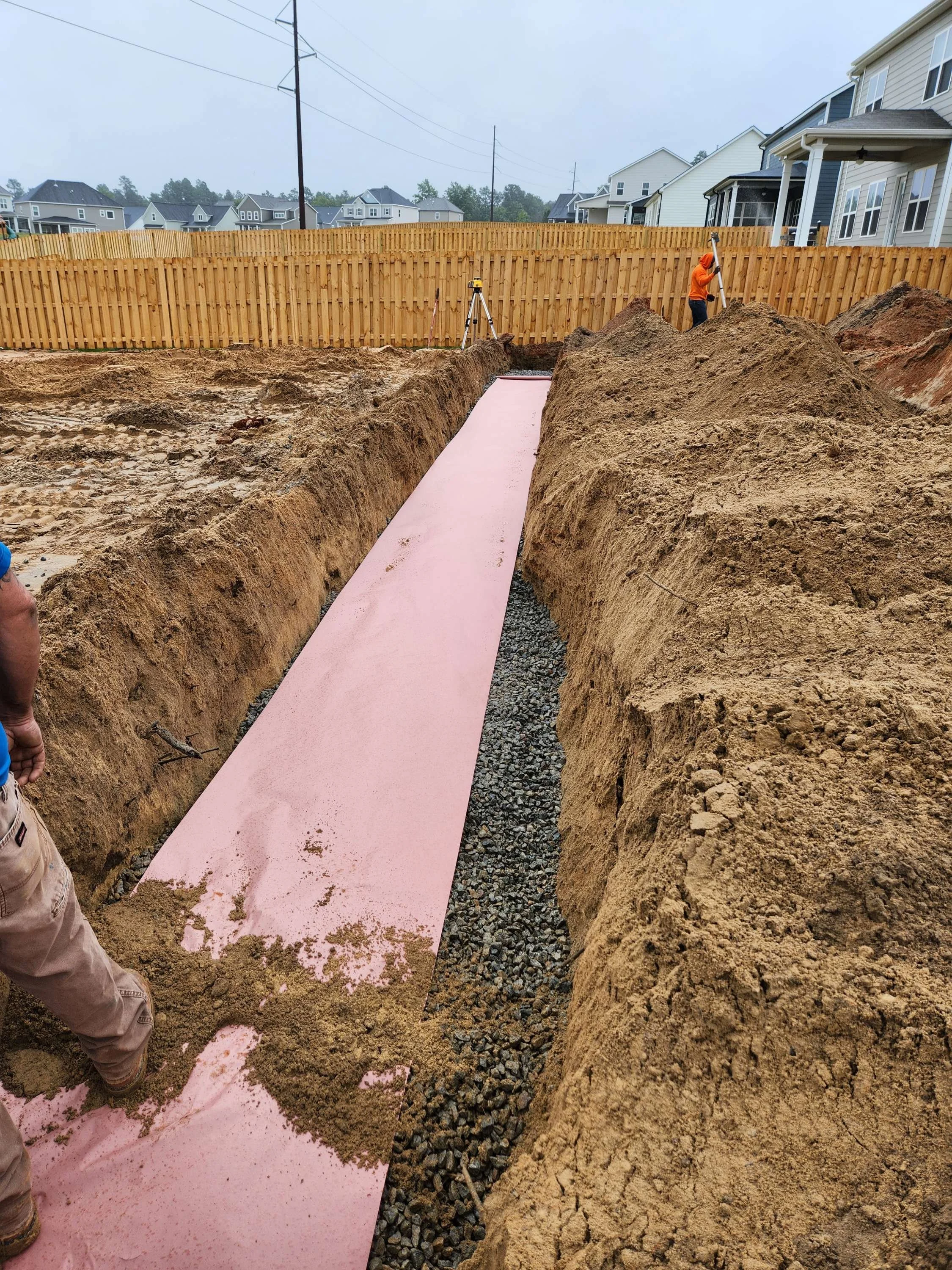
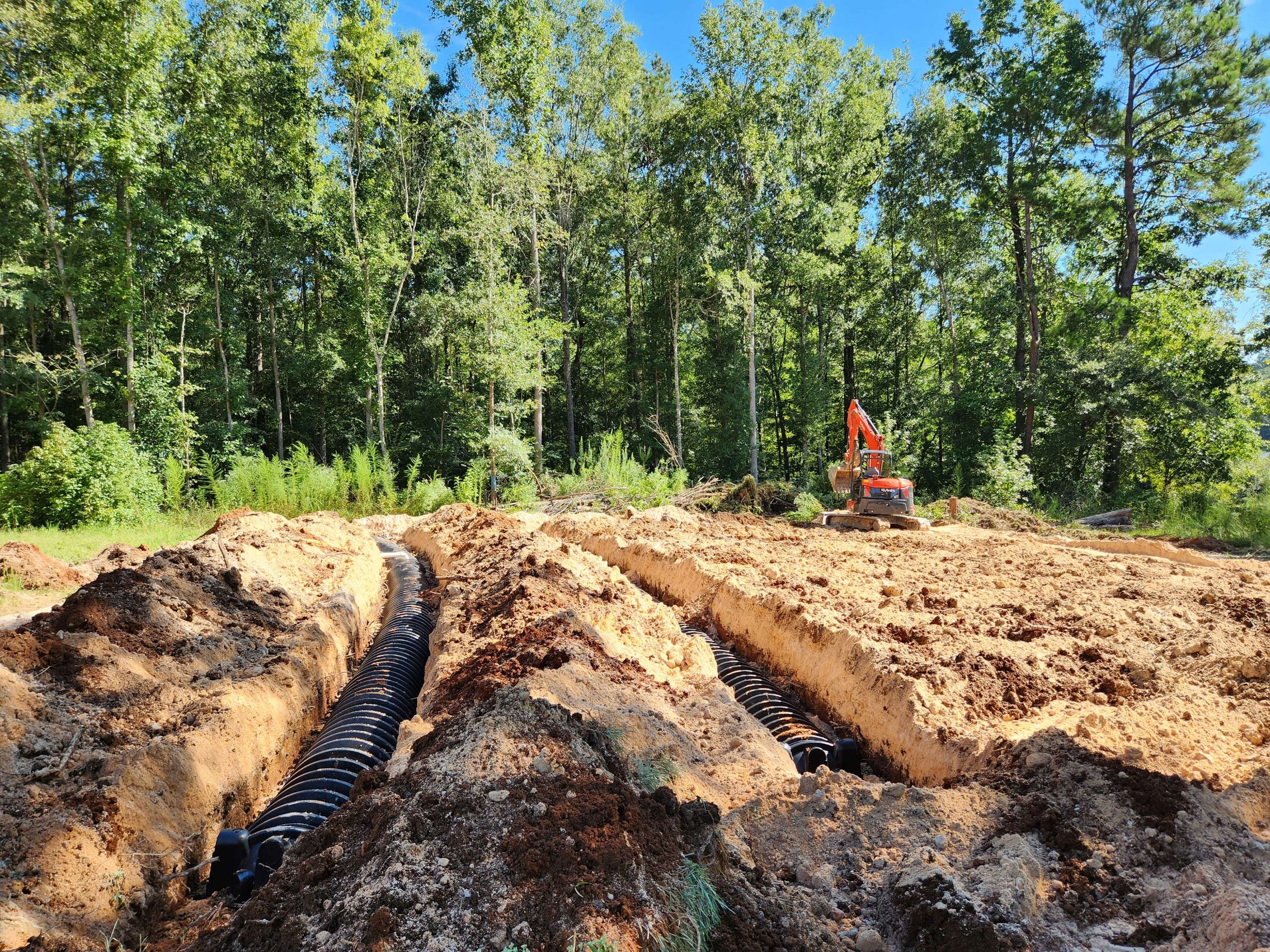
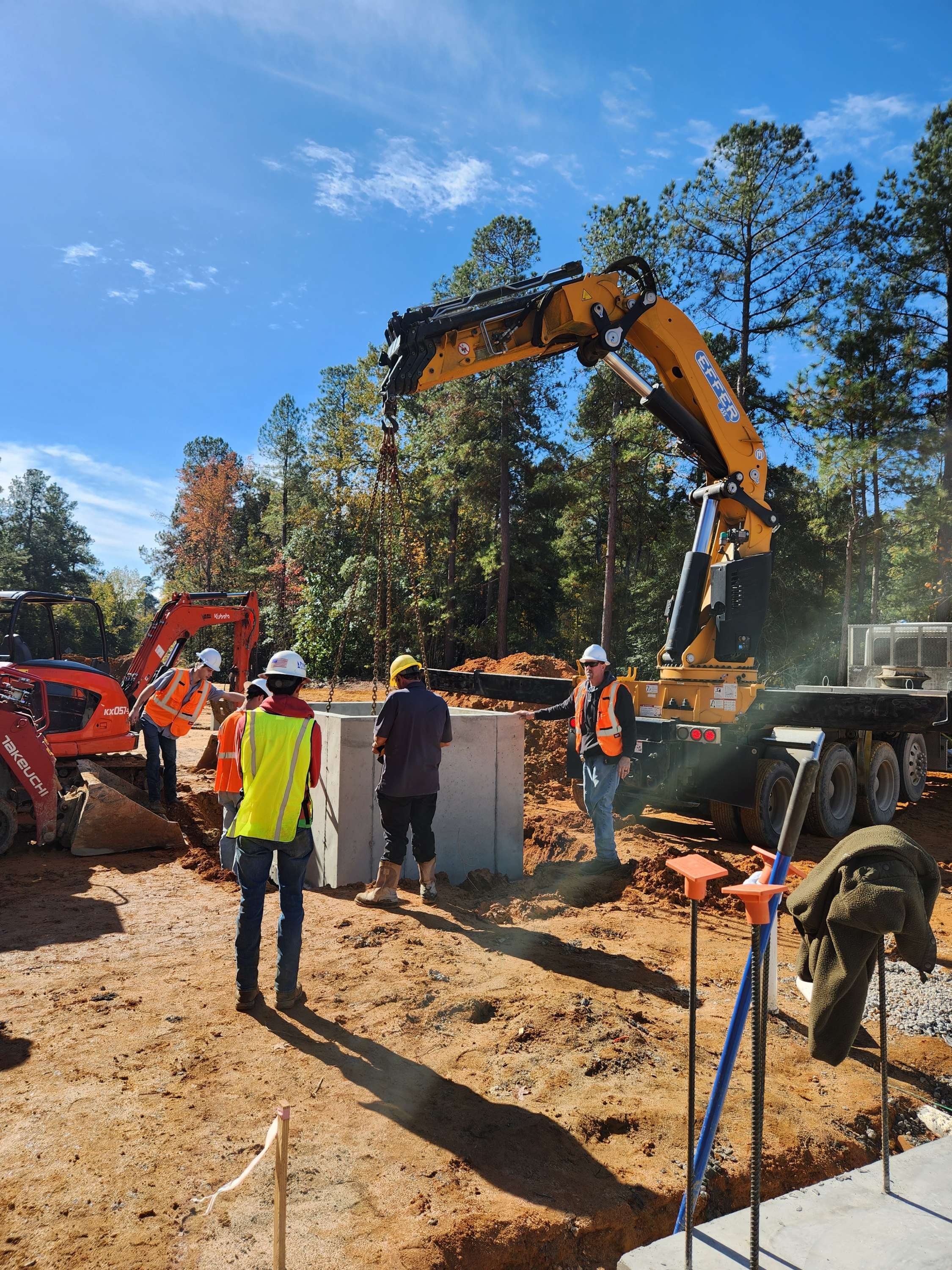
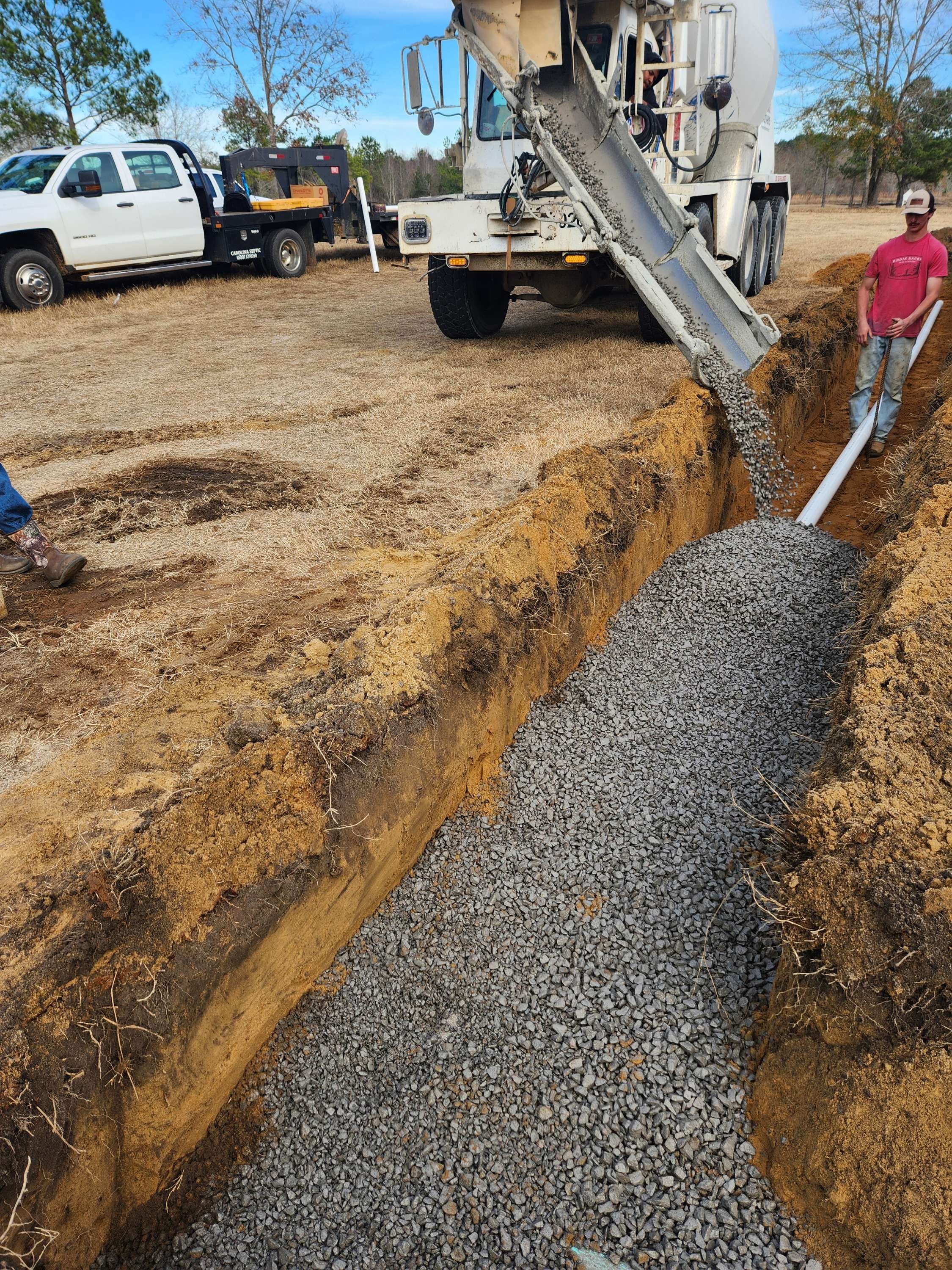
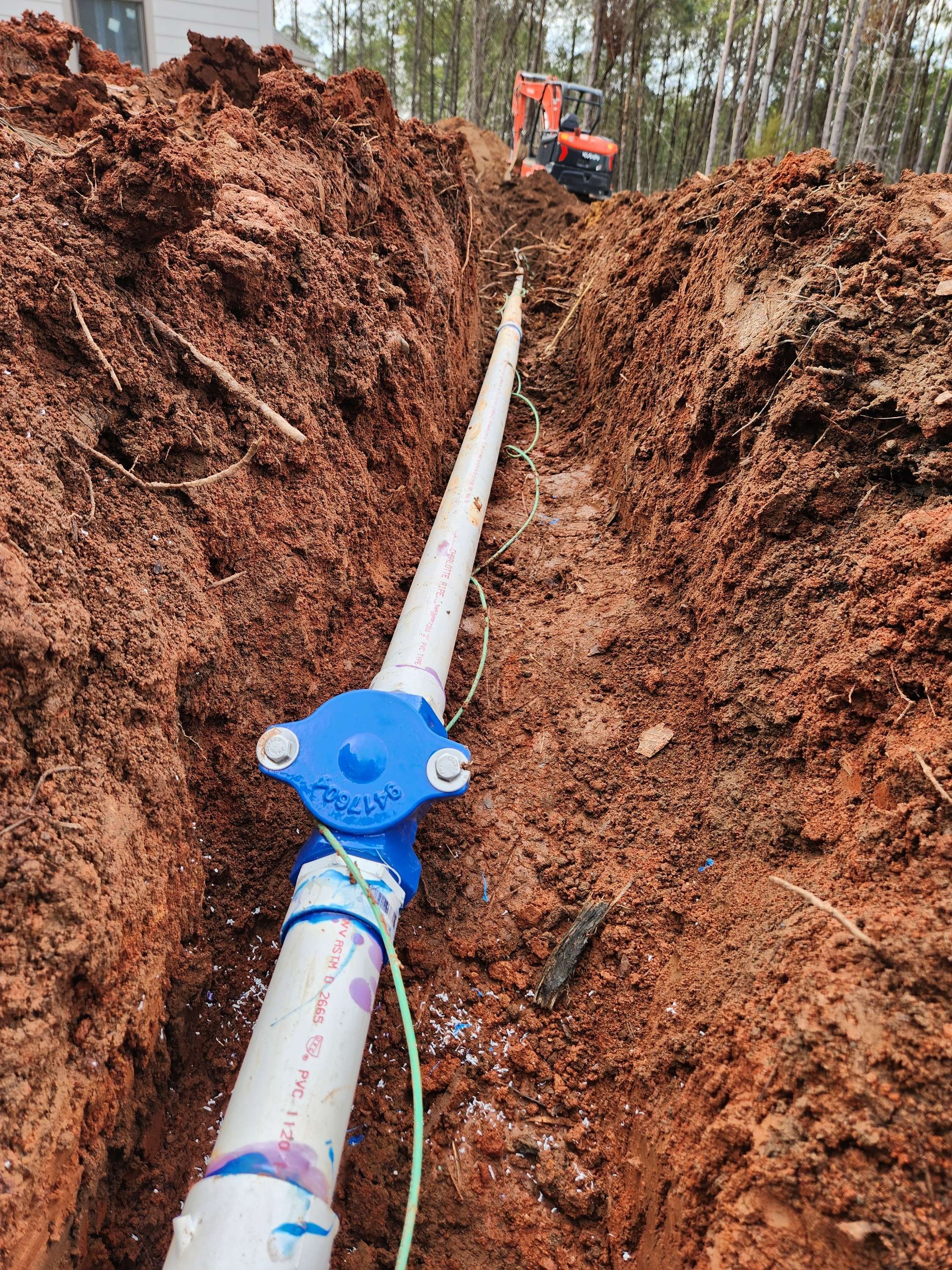
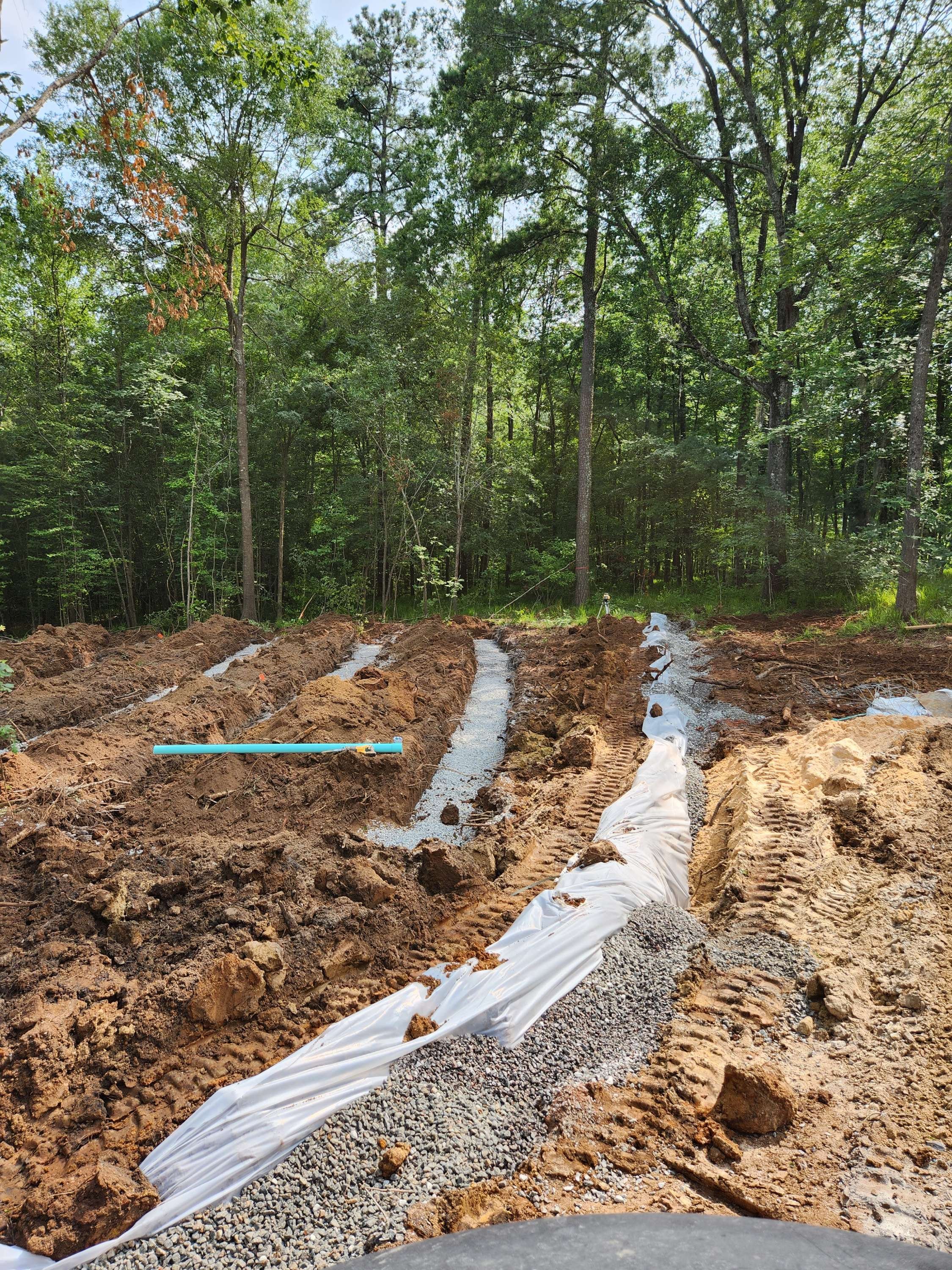
Every image on this site is a Carolina Septic job somewhere in the CSRA. Sixteen years of trucks, trenches, tanks and finished yards.
A chamber drainfield going in on red Piedmont clay. Four laterals, a distribution box, and chamber units set and ready for backfill.
Questions? Call Us
Talk to a Septic Pro
Pumping, a backup, a repair or a new system. Tell us what is going on and we will tell you what it takes.
Call (803) 278-6748We Are Closed Right Now
Book Online in 60 Seconds
Reserve your spot now and we will confirm first thing in the morning.
or call (803) 278-6748